I am an M.Sc. student in Machine Learning at Mohamed bin Zayed University of Artificial Intelligence (MBZUAI), advised by Prof. Zhiqiang Xu.
My previous research has focused on diffusion-based generative modeling and 3D reconstruction of biological microscopy images. A recurring theme in my work is recovering reliable spatial and temporal structure from noisy, distorted, incomplete, or inconsistent visual observations by modeling visual degradation and developing reconstruction methods that preserve structure.
My current research focuses on foundational questions in LLM and MLLM post-training, visual generative modeling, and reinforcement learning.
Education
-
Mohamed bin Zayed University of Artificial Intelligence (MBZUAI)Machine LearningM.Sc. in Machine LearningSep. 2025 - present
-
Shandong UniversityComputer ScienceB.S. in Computer ScienceSep. 2021 - Jun. 2025
Experience
-
MBZUAI and Shandong UniversityAdvisors: Prof. Renmin Han and Prof. Zhiqiang XuResearch AssistantOct. 2025 - present
-
Mathematics and Interdisciplinary Science Center, Shandong UniversityAdvisor: Prof. Renmin HanResearch InternJun. 2022 - Oct. 2025
News
Selected Publications (view all )
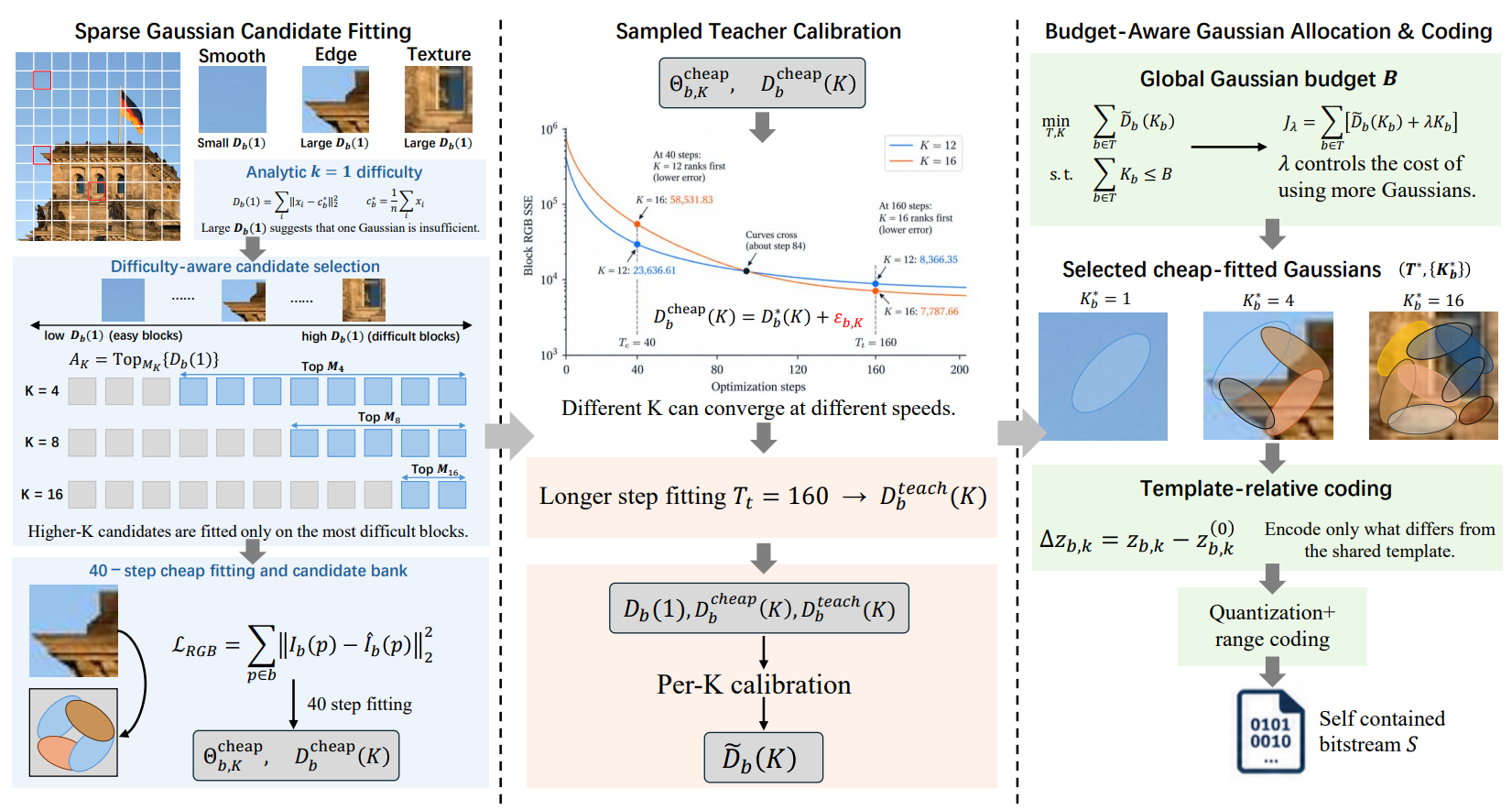
CaliSplat: Sparse Gaussian Fitting and Calibrated Rate Allocation for Image Compression
International Conference on Learning Representations (ICLR) 2027 Preprint, submitted to ICLR 2027
CaliSplat is an optimization-efficient Gaussian image codec that uses sparse candidate fitting, convergence-rate calibration, and global budget-aware Gaussian allocation to reduce per-image fitting cost while preserving strong rate-distortion performance and fast deterministic decoding.
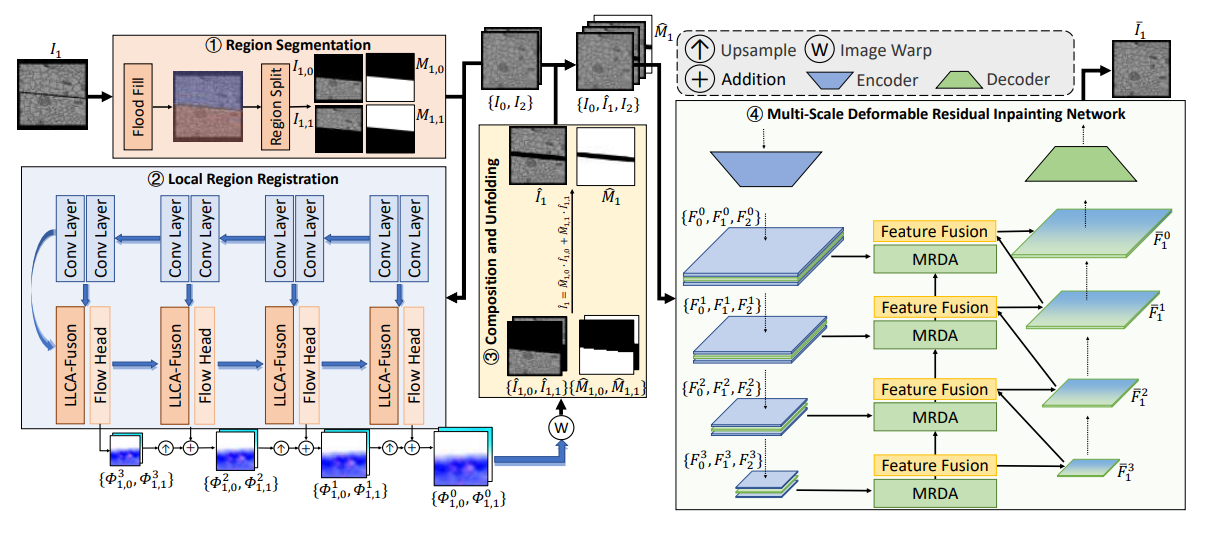
3D Registration-Guided Deformable Residual Inpainting for ssEM Restoration
Zhiqiang Xu, (* equal contribution)
Bioinformatics 2026 First author
RegInpaint is a 3D registration-guided deformable residual inpainting framework for serial section electron microscopy restoration.
3D Registration-Guided Deformable Residual Inpainting for ssEM Restoration
Zhiqiang Xu, (* equal contribution)
Bioinformatics 2026 First author
RegInpaint is a 3D registration-guided deformable residual inpainting framework for serial section electron microscopy restoration.
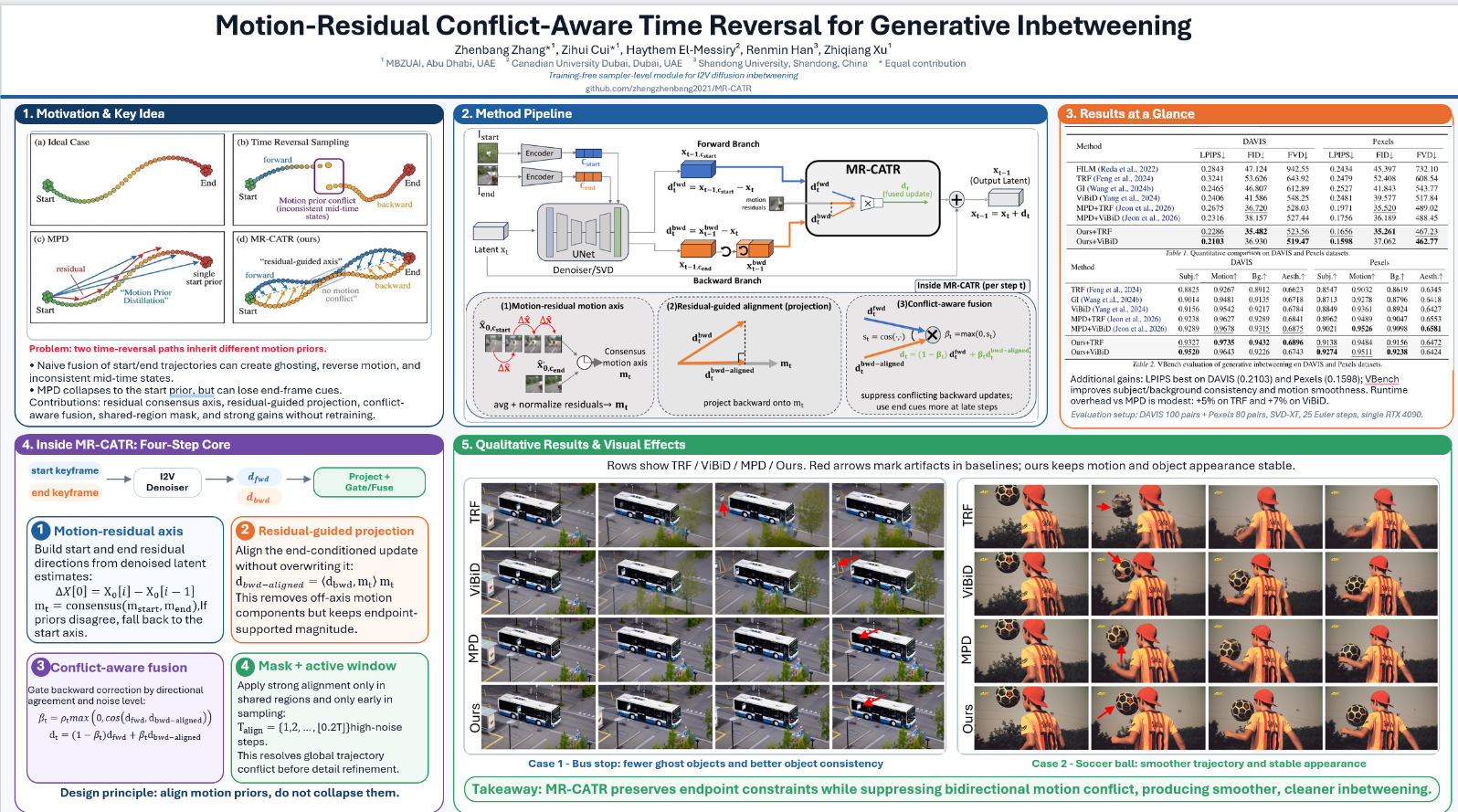
Motion-Residual Conflict-Aware Time Reversal for Generative Inbetweening
Zhiqiang Xu (* equal contribution)
Forty-Third International Conference on Machine Learning (ICML) 2026 First author
A motion-residual conflict-aware time-reversal method for generative inbetweening, accepted by ICML 2026.
Motion-Residual Conflict-Aware Time Reversal for Generative Inbetweening
Zhiqiang Xu (* equal contribution)
Forty-Third International Conference on Machine Learning (ICML) 2026 First author
A motion-residual conflict-aware time-reversal method for generative inbetweening, accepted by ICML 2026.
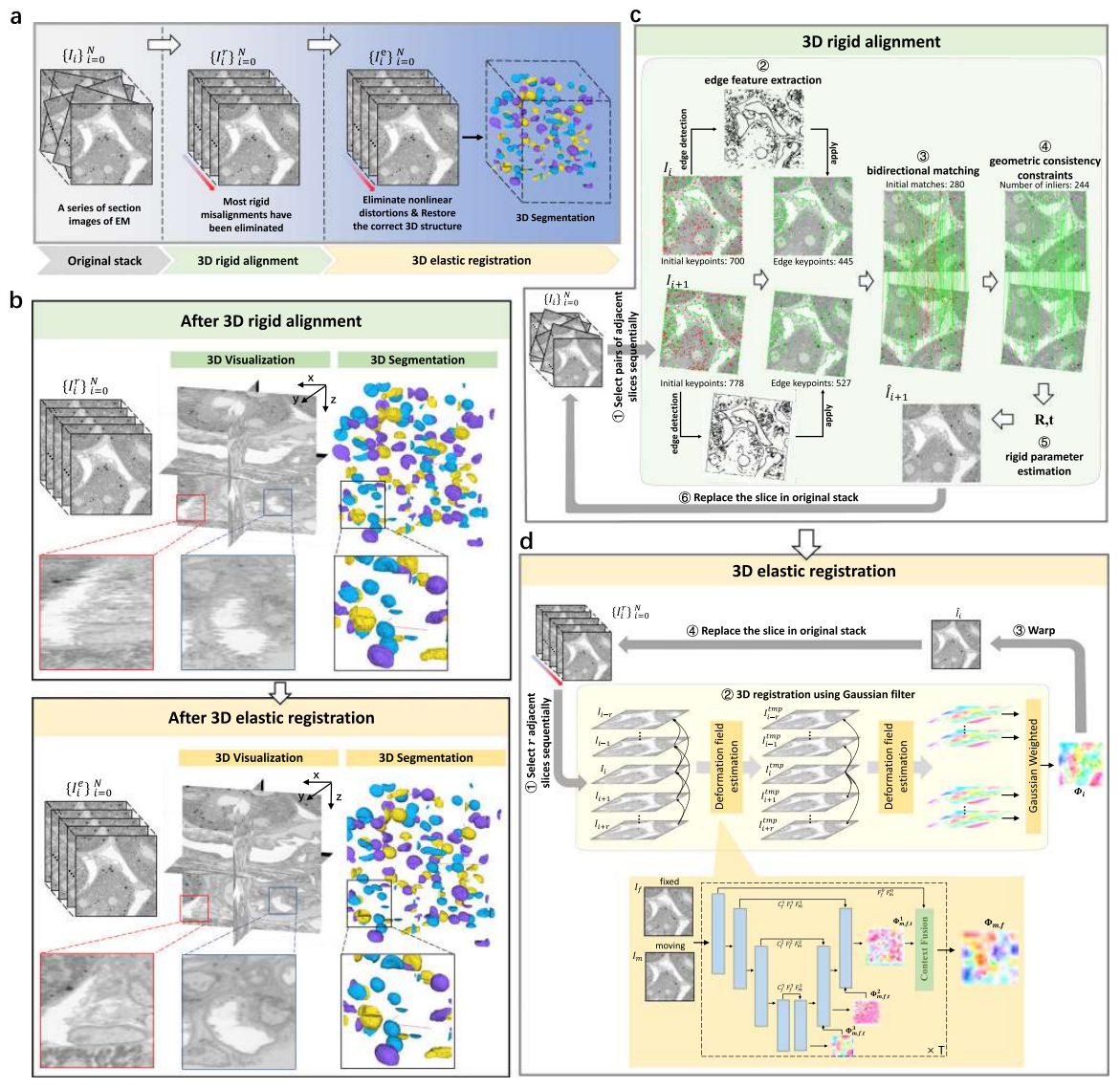
vEMRec: High-Resolution Volume Electron Microscopy Reconstruction Based on Structure-Preserving and High-Fidelity 3D Alignment
Zhiqiang Xu, (* equal contribution)
Advanced Science 2026 First author
An end-to-end 3D alignment pipeline for volume electron microscopy, validated on six real-world datasets exceeding 1 TB.
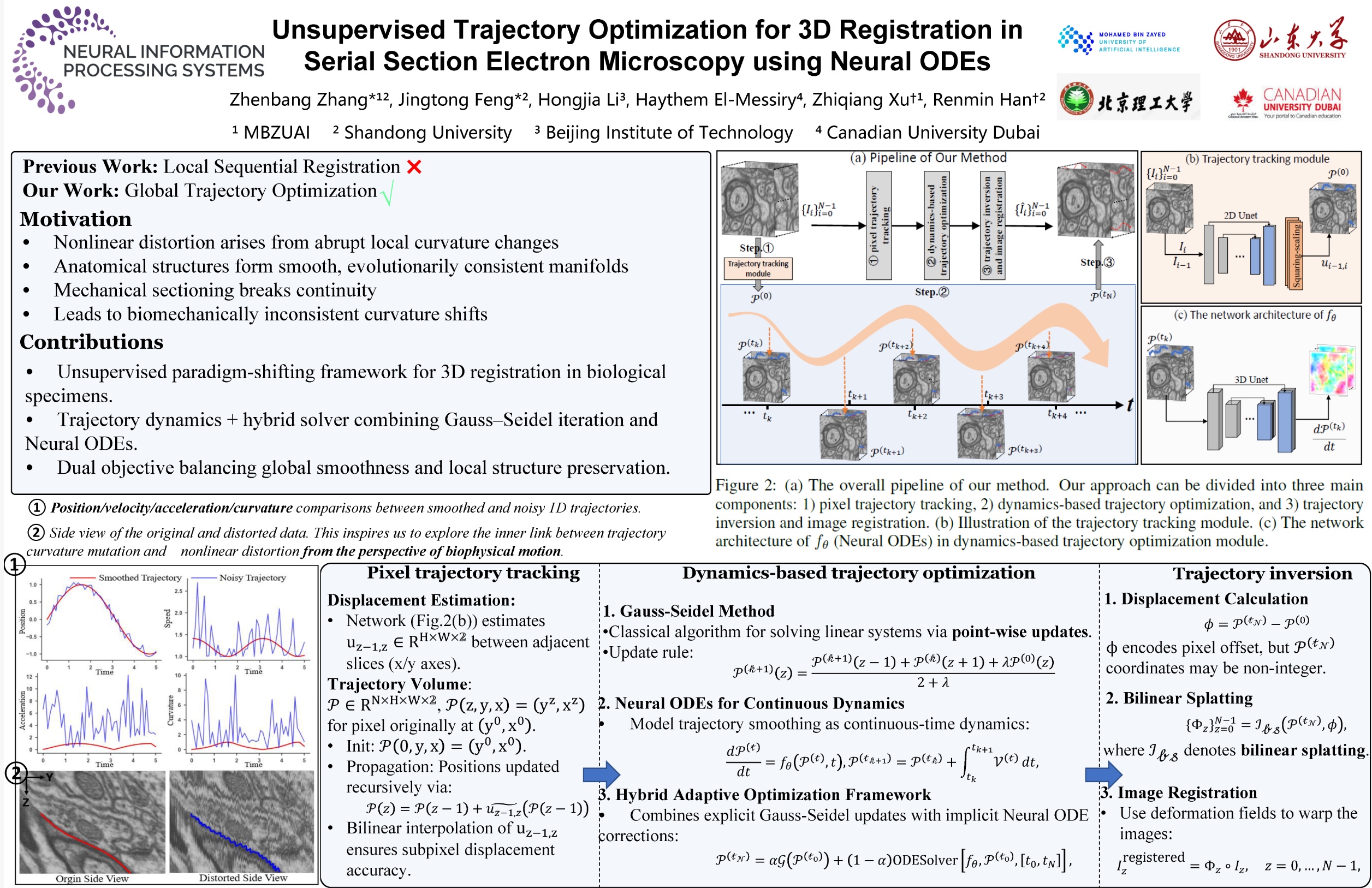
Unsupervised Trajectory Optimization for 3D Registration in Serial Section Electron Microscopy using Neural ODEs
Zhiqiang Xu, (* equal contribution)
Thirty-Ninth Annual Conference on Neural Information Processing Systems (NeurIPS) 2025 First author
An unsupervised trajectory-optimization framework based on Neural ODEs for 3D registration in serial section electron microscopy.
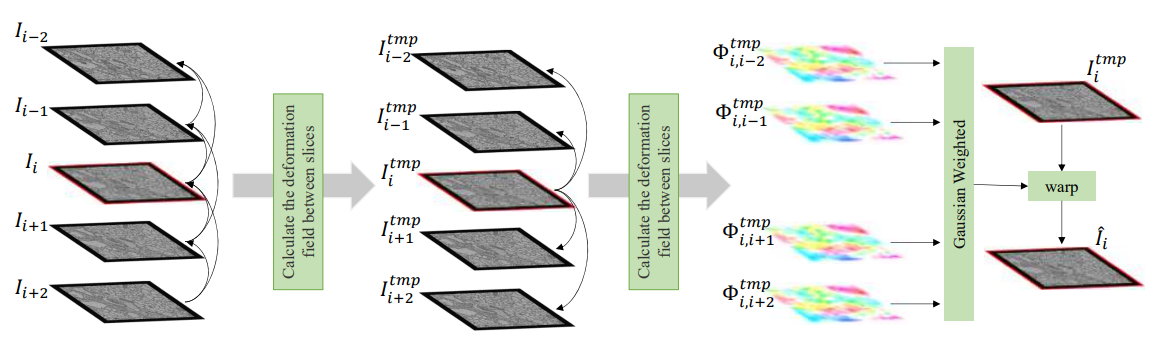
A Gaussian Filter-Based 3D Registration Method for Series Section Electron Microscopy
Zhiqiang Xu, (* equal contribution)
Thirty-Ninth AAAI Conference on Artificial Intelligence (AAAI) 2025 First author
A Gaussian filter-based 3D registration method for serial section electron microscopy, improving section alignment for downstream neuronal reconstruction.
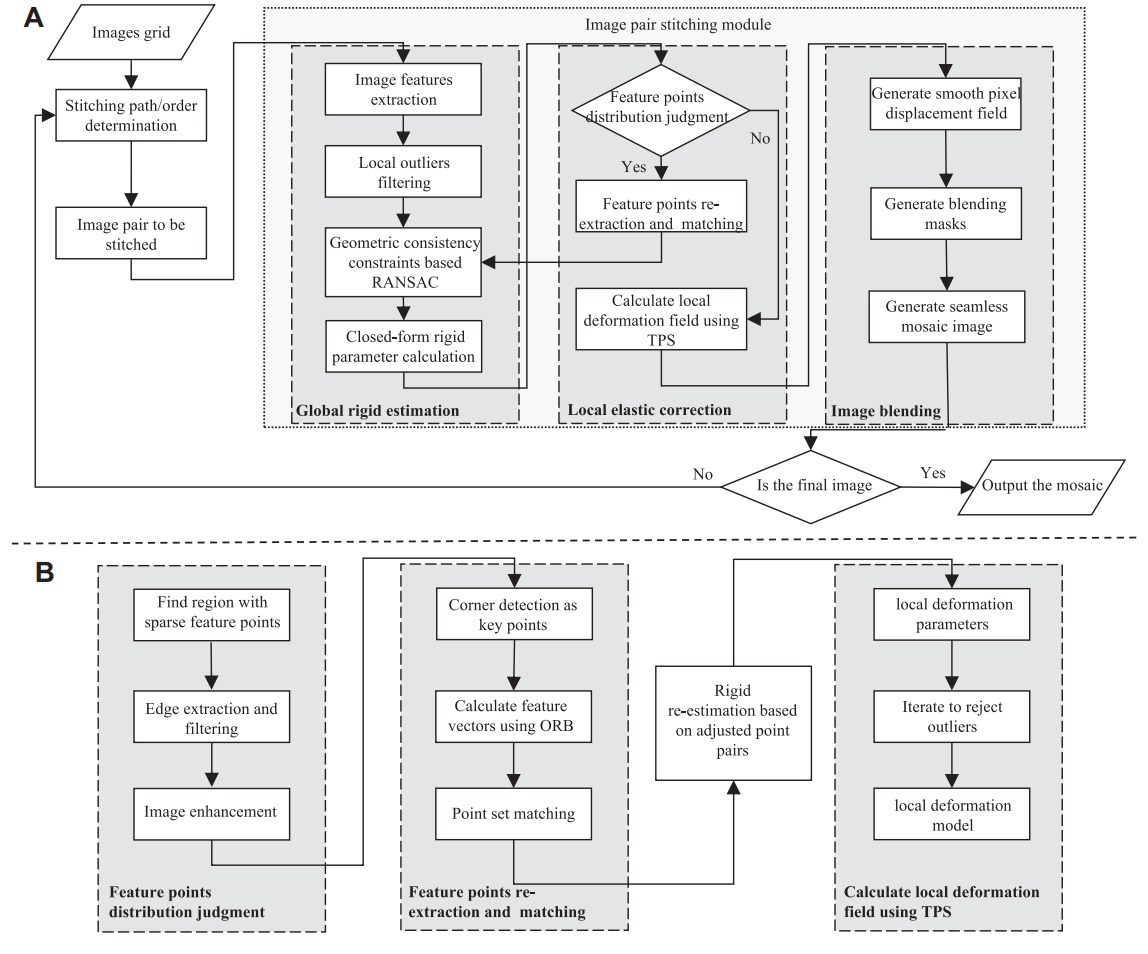
vEMstitch: An Algorithm for Fully Automatic Image Stitching of Volume Electron Microscopy
(* equal contribution)
GigaScience 2024 Co-first author
An algorithm for fully automatic image stitching of volume electron microscopy, improving continuity across sections for downstream connectomics workflows.